Quinoa
16 January is the day on which most countries in the world celebrate this superfood, which deserves a place of honour in your meals.
It comes from the flowering quinoa plant, of the genus Chenopodium. It has been cultivated for some 5000 years and is native to the Andes in South America.
The Incas called it „the mother of all grains“ and believed it to be sacred.
Growing demand has spread its cultivation beyond South America to more than 70 countries, above all China, France and India. Lately it has been getting more and more popular here in Macedonia too.
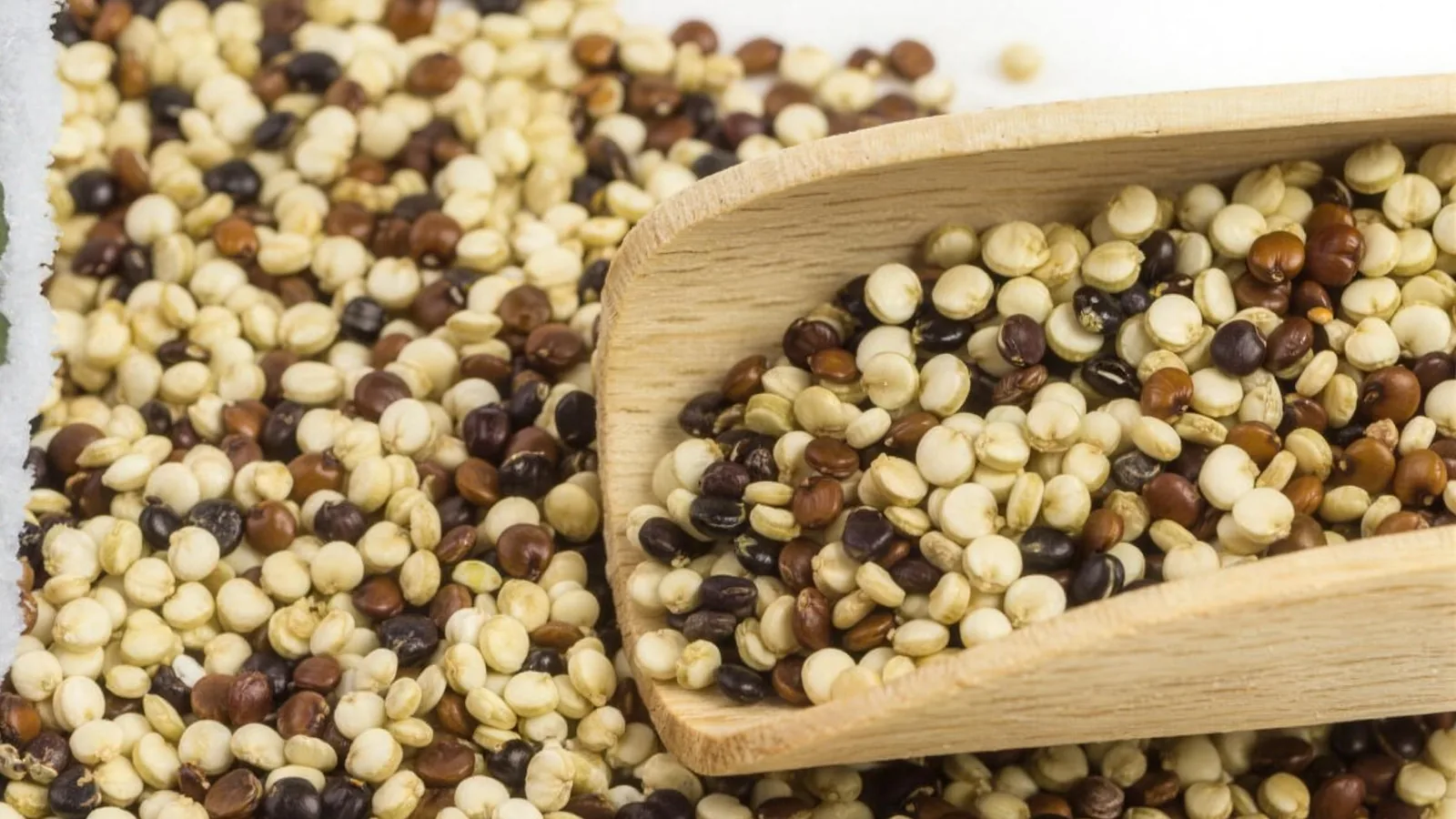
There are over 150 kinds of quinoa, the most common being white, black and red.
Every part of the plant is put to use, the leaves, the flowers, the root, but it is the exceptionally nutritious seed that is used most.
People who avoid meat need to find good, high-quality sources of protein in order to meet the body's daily need for this very important macronutrient. Quinoa seed is an excellent choice for them. A single cup of quinoa contains around 10 g of protein, and protein of excellent quality at that. That quality comes from all nine essential amino acids, all of which are present in quinoa.
One cup of quinoa provides 2.76 mg of iron, which is 34.5% of the recommended daily intake for men and 15.33% for women.
As a reminder, iron is essential to a whole range of processes in the human body. It is, for example, a vital part of the compound called haemoglobin. That compound is the main carrier of oxygen in the blood, supporting energy and cell function throughout the body.
One cup of 185 grams provides around 30% of the daily requirement of magnesium.
Even scientists at NASA have looked at it as a possible crop to grow in space, largely because of its high nutrient content, how easy it is to prepare and how simple it is to grow.
Have you tried our tofu quinoa salad?